
October 2, 2026·7 min read

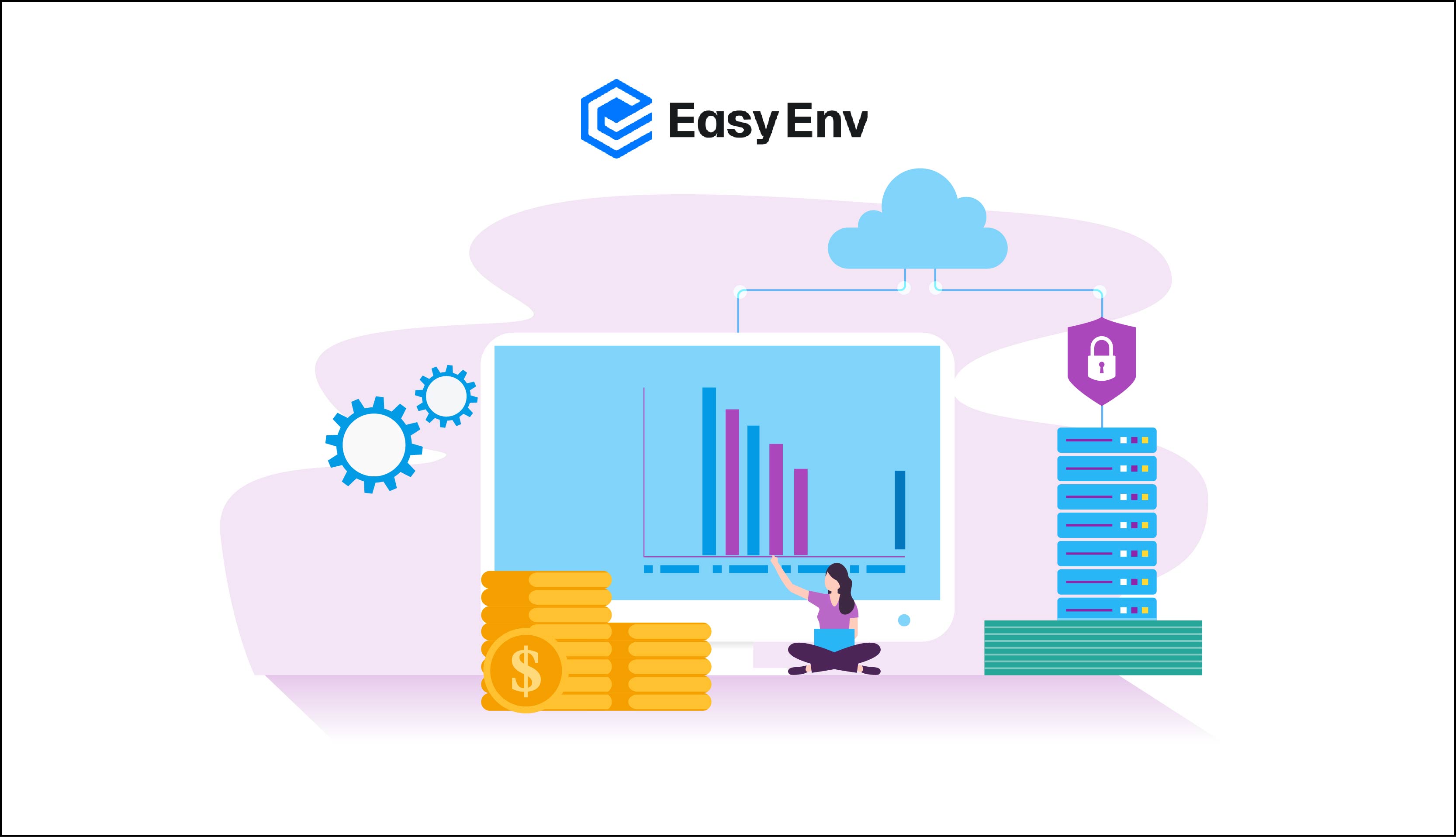
Review your cloud invoice from last month. You will likely see a significant line item for Staging, Test, or QA environments. This is often accepted as a fixed operational cost.
However, an analysis of utilization rates reveals a different story.
There are 168 hours in a week. A standard engineering team operates for approximately 40 hours. Even accounting for overtime or distributed teams, most non-production environments sit idle during nights and weekends.
This means that for roughly 128 hours every week these resources consume budget without generating value. That represents nearly 76% of the infrastructure spend for these environments. This is a massive inefficiency in resource allocation.
The Hidden Cost of Static Infrastructure
Organizations typically maintain static staging servers to avoid the complexity of provisioning. Turning servers off creates a risk that they might not restart correctly.
Consequently, teams leave them running. This decision drives up OpEx unnecessarily.
Beyond the direct financial cost, static servers suffer from Configuration Drift. A developer might manually patch a staging server to resolve an immediate issue but fail to commit the change to the repository. This creates a discrepancy between Staging and Production.
When the team validates code on a drifted staging environment, the results are unreliable. Deployment failures in production increase because the test environment did not accurately reflect reality.
The Solution: On-Demand Ephemeral Environments
The most efficient model is On-Demand infrastructure. We provision resources only when required and terminate them immediately after use.
The operational workflow transforms as follows:
Operational Impact
Aligning infrastructure uptime with actual engineering hours yields significant results. We typically observe a 60% to 70% reduction in non-production cloud costs.
The operational benefits extend beyond finance.
Implementation Strategy
Transitioning to this model does not require a total re-architecture. Start with the highest-cost services. These are typically the database and the primary application layer.
By defining these services as a reusable Recipe in tools like EasyEnv, organizations can automate the entire lifecycle. This ensures that budget is spent on innovation rather than idle capacity.
Run live coding sessions and take-home challenges in real production environments. Watch sessions back, score consistently, and hire with confidence.
More posts you might like
CoderPad is a strong, well-built live coding tool for teams with a steady interview pipeline and a recruiting function to run it. A ten-person startup doing its own hiring is a different buyer with different constraints. Here is what changes, and what to check in any CoderPad alternative for startups before you commit.
Every vendor calls its test a practical developer assessment and none of them define the word. Here is a four-question test you can run on any assessment in five minutes, worked through on a real example, to tell a work sample from a puzzle wearing a nicer outfit.
Read more
A live coding interview environment is more than a shared editor on a call. Here is what it actually needs to include, and how the three common setups compare when you look past the demo.
Read more
