Security interviews love trivia. Explain the OWASP Top 10. What is the difference between symmetric and asymmetric encryption. Walk me through a TLS handshake. A candidate who has studied for the certification answers all of it, and then cannot spot an obvious misconfiguration when it is sitting in front of them.
Security work is applied, adversarial, and hands-on. It is finding the weakness nobody documented and deciding how to close it without breaking the system. That is what you should interview for, and it does not fit in a quiz.
Why the trivia quiz fails for security
Knowing the name of an attack class is not the same as recognizing an instance of it in a real system. The candidate who can define SQL injection may still miss the unparameterized query in the code in front of them. The one who can recite hardening guidelines may not notice the world-readable secrets file on the box.
Security is pattern recognition under adversarial conditions. The only way to test it is to put a real weakness in front of the candidate and see whether they find it, understand it, and can fix it without collateral damage.
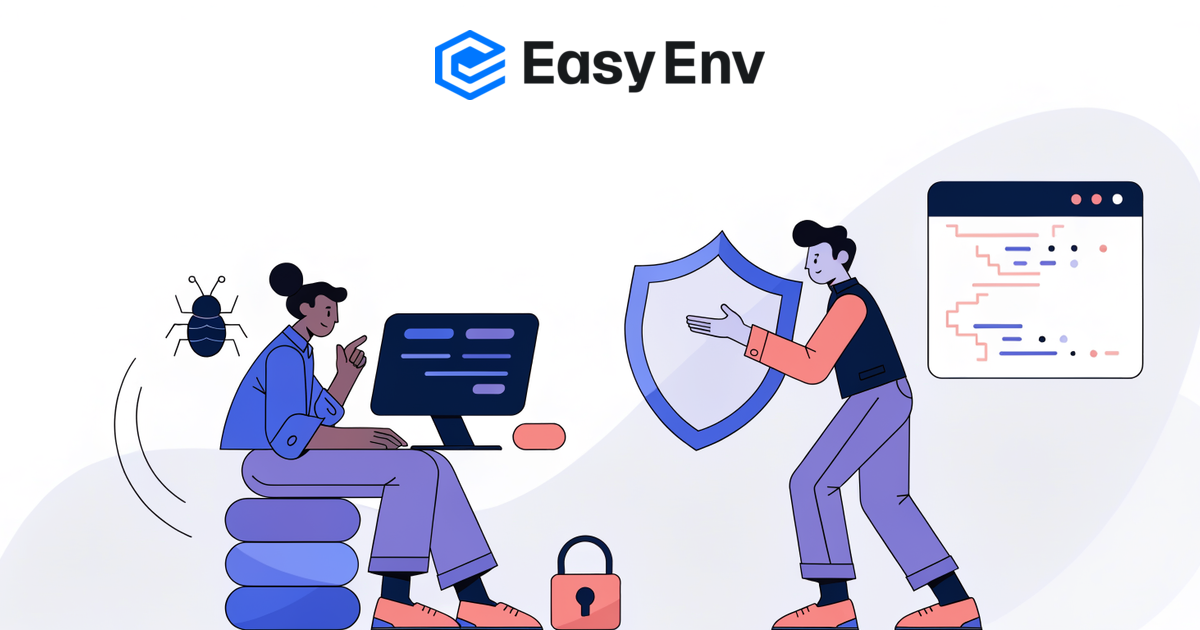
The attack-and-defend exercise
Give the candidate a real, running box with a genuine, contained weakness, and a brief scoped to the role. The exercise has two halves, and you can weight them to the job:
- Attack (find it). "This service has at least one exploitable weakness. Find it and show me the impact." Tests whether they can think like an attacker and actually demonstrate the issue, not just theorize about it.
- Defend (fix it). "Now close it, and tell me what else on this box you would harden." Tests whether they can remediate cleanly, understand the tradeoffs, and prioritize the real risks over the cosmetic ones.
Weaknesses that discriminate well:
- an injection or auth-bypass in a small app, where finding it requires actually probing, not guessing
- an exposed secret or credential in a config, log, or environment, testing whether they look where secrets leak
- an over-permissive file or service permission, testing whether they understand least privilege in practice
- a dependency with a known vulnerability, testing whether they can assess real exploitability versus scanner noise
The point is not gotcha difficulty. It is realism: the kinds of weaknesses that actually show up in production, found and fixed the way they would be on the job.
Scope it safely and legally
A live security exercise needs guardrails, and setting them well is itself a signal about how you operate:
- Contain the environment. The box is isolated and disposable, with nothing real behind it. The candidate should be free to be aggressive without any chance of touching a real system.
- Set explicit rules of engagement. State what is in scope and what is off-limits, exactly as a real engagement would. A candidate who asks about scope before they start is showing you good instincts.
- No real credentials or data. Everything on the box is synthetic. This is basic, and getting it wrong in an interview is the same mistake that causes incidents.
- Reset between candidates. A fresh, identical environment per candidate keeps the exercise fair and prevents one candidate's changes from affecting the next.
A disposable, isolated, reset-per-candidate environment is exactly what an ephemeral-environment platform is for, which is a large part of why we built this into EasyEnv rather than asking teams to stand up and tear down VMs by hand.
What to score
Score the practitioner behaviors, not the vocabulary (write them into a shared rubric so the panel agrees, as in how to write a technical interview rubric):
- Did they find the real issue, or chase theoretical ones while missing the obvious one in front of them?
- Did they demonstrate impact, or just assert that something "could" be exploited?
- Was the fix correct and proportionate, or did they break functionality to close a minor risk?
- Did they prioritize? A strong candidate ranks the world-readable secret above the missing security header and says why.
- Did they respect scope and handle the environment responsibly? Good security engineers are careful by instinct.
A candidate who cleanly finds one real vulnerability, proves it, fixes it without collateral damage, and correctly deprioritizes a cosmetic finding is a better hire than one who lists ten theoretical issues and cannot exploit or fix any of them.
Why a real box beats a questionnaire
You cannot assess applied security on paper. The signal is whether they recognize a real weakness in a real system and remediate it without breaking things, and that only exists when there is a real system to work on.
EasyEnv gives each candidate an isolated, disposable box with a seeded weakness and records the session. The panel reviews exactly how the candidate probed, what they found, and how they fixed it, which turns a subjective "seemed sharp" into a concrete record of adversarial reasoning. For a security hire, where the cost of a miss is an incident, that record is the whole point.
The takeaway
Reciting attack classes is a baseline. Finding and fixing a real weakness, safely and proportionately, is the job.
Give the candidate a real box, scope it responsibly, and watch them work both sides.