
September 17, 2026·5 min read
Candidate EvaluationEngineering HiringEngineering Manager Technical InterviewHiring ProcessHiring Signals

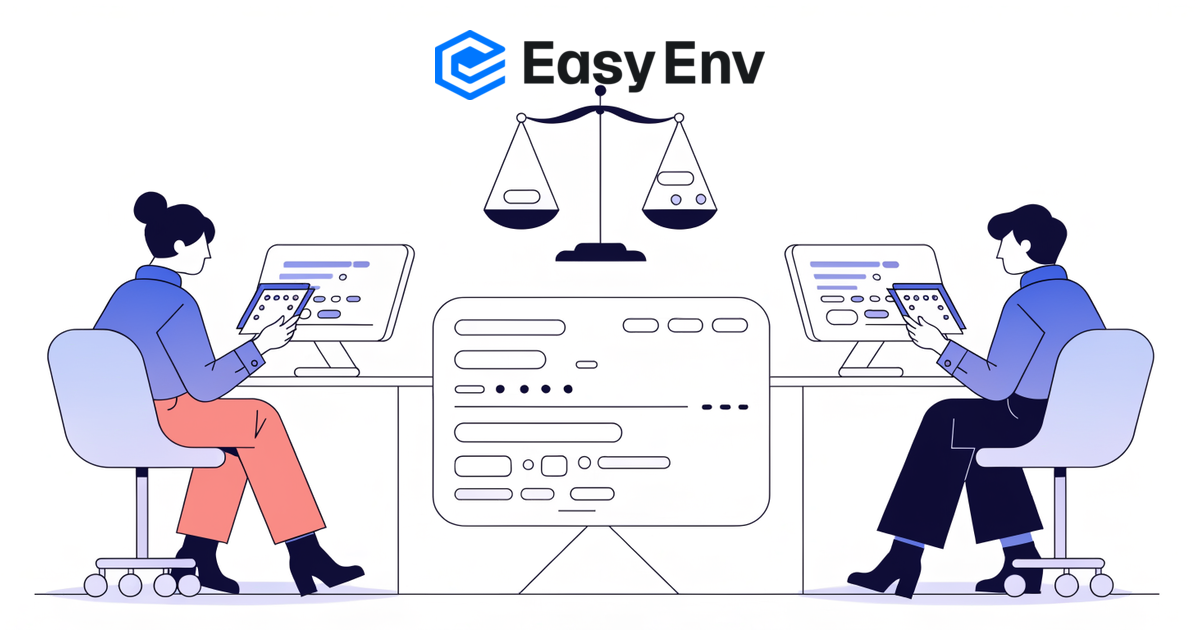
Two of your engineers interview the same candidate on the same day. One says strong hire. The other says no. Both are experienced, both are acting in good faith, and they watched the same person. When that happens, the honest conclusion is uncomfortable: your interview is not measuring the candidate reliably. It is measuring the interviewer.
Disagreement is not automatically bad. Sometimes two people genuinely saw different things and the conversation surfaces real signal. But most interviewer disagreement is drift, not insight, and drift is fixable. Here is where it comes from and how to close it.
When interviewers reach different verdicts on the same candidate, the cause is usually one of a few structural problems, not a difference in judgment:
Notice that none of these are about the candidate. They are about the measurement instrument, which is the panel.
The research on this is consistent: structured interviews, where every candidate faces the same questions scored on the same predefined scale, predict job performance substantially better than unstructured ones, and they reduce bias because they leave less room for gut calls to stand in for evidence. (For a widely cited synthesis, see the classic meta-analytic work by Schmidt and Hunter on the predictive validity of selection methods.)
Structure is also what makes a panel converge. If two interviewers ask the same task and score against the same rubric, their disagreement shrinks to the parts that are genuinely debatable, which is exactly where you want the conversation to happen.
Concretely, calibration rests on three things:
A rubric on paper does not calibrate a panel by itself. You have to actively align the people:
You cannot re-watch a whiteboard. Calibration that depends on recordings needs sessions that are actually captured and reviewable.
EasyEnv runs candidates in a real environment on a shared task and records the whole thing: the terminal, the edits, the order it happened. That recording is what makes panel calibration possible in practice. Interviewers can review the same evidence, new panelists can train against past sessions, and a disagreement becomes a specific moment two people can rewind to, rather than a clash of impressions. The measurement instrument gets more reliable over time, which is the entire point.
When your interviewers disagree, suspect the measurement before the candidate. Same task, same rubric, same reviewable record, and independent scoring before debate. That is what turns a panel of individual opinions into a reliable instrument.
Calibrate the interviewers, and the disagreements that remain will finally be about the candidate.
Run live coding sessions and take-home challenges in real production environments. Watch sessions back, score consistently, and hire with confidence.
More posts you might like
Engineering managers should not take coding tests, and most EM loops overcorrect into pure behavioural questions that everyone has rehearsed. Here is a middle path that tests the judgment calls the job actually consists of.
Most QA interviews test vocabulary, and vocabulary is not the skill. Here is how to assess testers and test automation engineers on a running application, starting with the single best question there is: a genuinely flaky test.
Read more
Almost every Python candidate can write a comprehension and a decorator. Far fewer can say why the worker grew to 6GB overnight. Here are the tasks that separate them, run on a real box with a real process.
Read more
