
October 27, 2026·5 min read

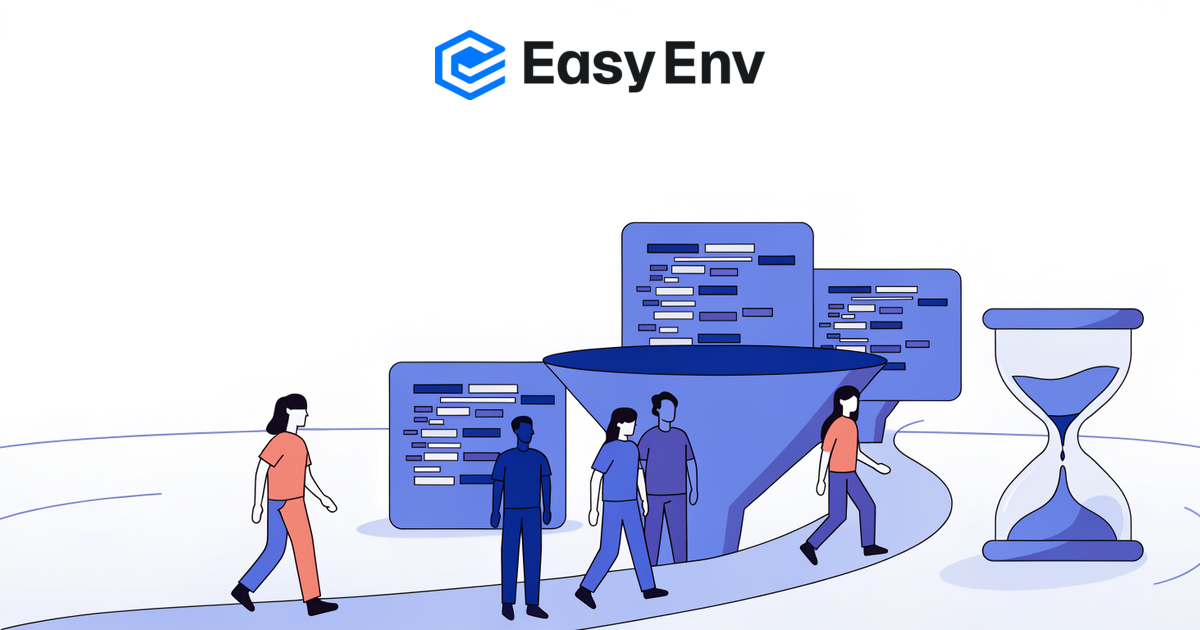
The candidates you least want to lose are the ones most likely to walk. A strong senior engineer is interviewing at four places, has a current job, and has no patience for a process that treats their time as free. The mediocre candidate with no other offers will tolerate your five-round marathon. The one you actually want will not.
So the shape of your process is quietly selecting against your best applicants. Every extra round, every unexplained delay, every unpaid weekend take-home is a filter that removes the people with options first. Here is where it happens and what to do about it.
From the funnels we see, the leaks cluster in a few predictable places:
None of these filter for skill. They filter for desperation and free time, which is the opposite of what you want.
The instinct when a hire goes wrong is to add another round. That makes the funnel worse. The better move is to get more signal per hour of the candidate's time, so you need fewer rounds.
One well-designed, real-environment session can replace several shallow ones. If you watch a candidate work in a real environment on a task that looks like the job, you learn more in 45 minutes than three separate algorithm rounds tell you, because you are seeing the actual behaviors that predict performance, not proxies for them.
That is not just kinder. It is a competitive advantage. When your process is one focused session plus a decision, and your competitor's is five rounds over three weeks, you close the candidate before they finish your competitor's second round.
Part of what makes candidates drop out is the sense that the process is theater: performing on a whiteboard, submitting a take-home into a void. A real-environment session flips that. The candidate is doing recognizable work, which feels fair, and because the session is recorded and reviewable, you need fewer confirmatory rounds. EasyEnv exists to make that single high-signal session possible, so the process can be both shorter for the candidate and more informative for you.
The candidate experience and the quality of your signal are not a tradeoff. The same change (one real, respectful, high-signal session) improves both.
Your best candidates have options, so they leave first when the process is long, redundant, or disrespectful of their time. Fewer rounds with more signal each keeps them in.
Design the funnel for the candidate you most want to hire, not the one with nowhere else to go.
Run live coding sessions and take-home challenges in real production environments. Watch sessions back, score consistently, and hire with confidence.
More posts you might like
Most API interviews turn into a style argument about plurals and status codes. The decisions that cost money are elsewhere. Here are four tasks on a running service that test retries, compatibility, pagination and error design, with what a strong answer sounds like.
Substitution is rare, real, and concentrated at the volume end of hiring where nobody meets anybody before the offer. ID uploads and webcam checks mostly inconvenience honest candidates. Here is what actually makes a stand-in impossible, and what it costs.
Read more
A week inside the team answers nearly everything an interview is guessing at, and rules out most of the people worth hiring. Here is when a trial earns its cost, how to structure one that is fair, and what to run instead when it is the wrong tool.
Read more
